


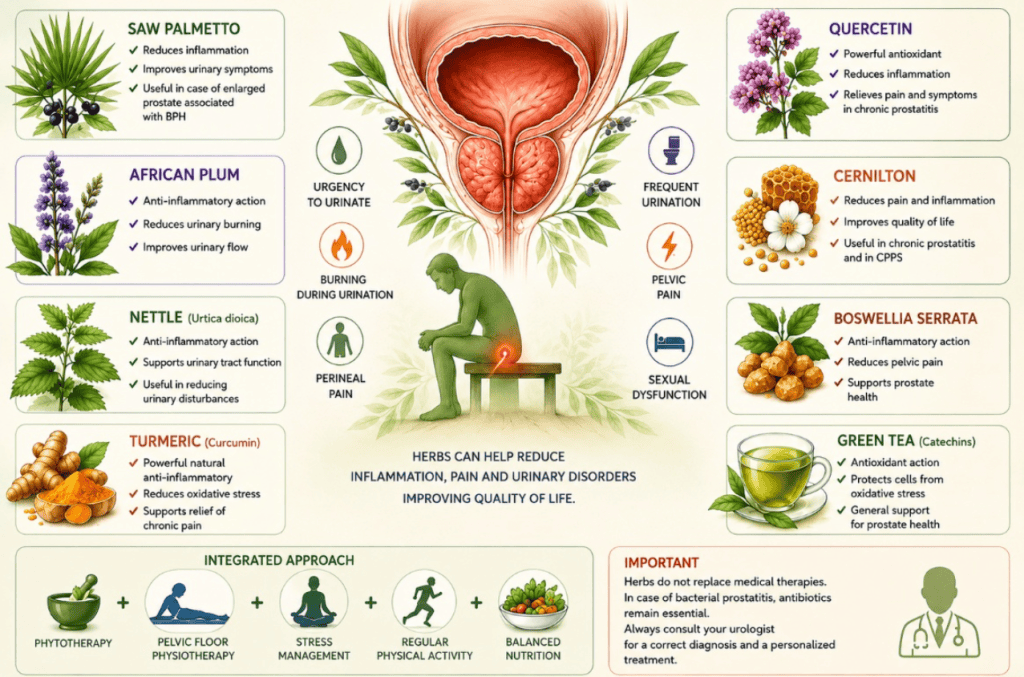
When urinary burning, perineal pain, pelvic discomfort, or sexual dysfunctions appear, many men search the internet for a natural solution based on effective herbs for prostatitis.
The most frequent questions I am asked are which herbs are good for the prostate, if there are effective natural remedies for prostatitis, what is the best supplement for chronic prostatitis, and finally, the most common question: can phytotherapy replace medications?
The answer is more complex than one might think.
Some medicinal plants actually possess anti-inflammatory, antioxidant, and decongestant properties that can help improve the symptoms of chronic prostatitis and chronic pelvic pain syndrome (CPPS). However, no herb is capable of eliminating acute bacterial prostatitis or replacing antibiotic therapy when it is necessary.
What are the most commonly used herbs for prostatitis?
Based on available scientific evidence, the most studied natural substances are:
- Quercetin
- Cernilton
- Serenoa repens
- Curcumin
- Pygeum africanum
- Boswellia serrata
- Nettle
Let’s see what we really know.
Quercetin (e.g., OTI quecitina)
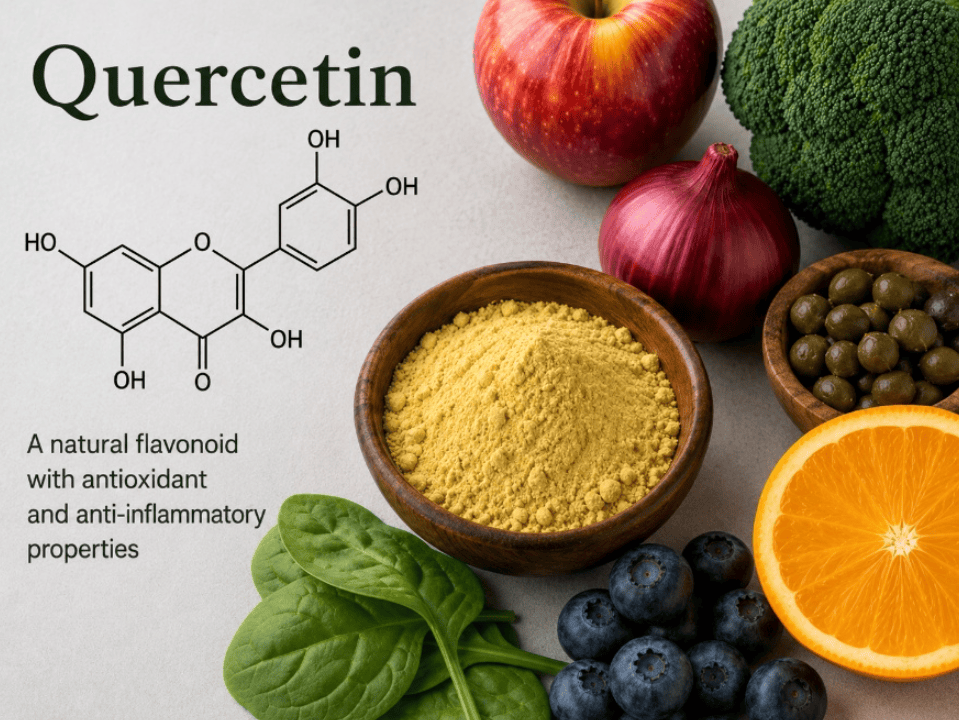
If I had to point out a natural substance with the best evidence for chronic prostatitis today, I would choose quercetin.
Quercetin is a flavonoid naturally present in onions, apples, capers, berries, and green tea.
Several clinical studies have shown significant symptom improvements in patients suffering from CPPS.
Its main actions depend on the reduction of oxidative stress, the decrease of inflammation through mast cell stabilization, and the protection of nerve endings.
Many researchers believe its effectiveness is linked to its ability to reduce the neurogenic inflammation that characterizes many cases of chronic pelvic pain.
Cernilton (e.g., Graminex)
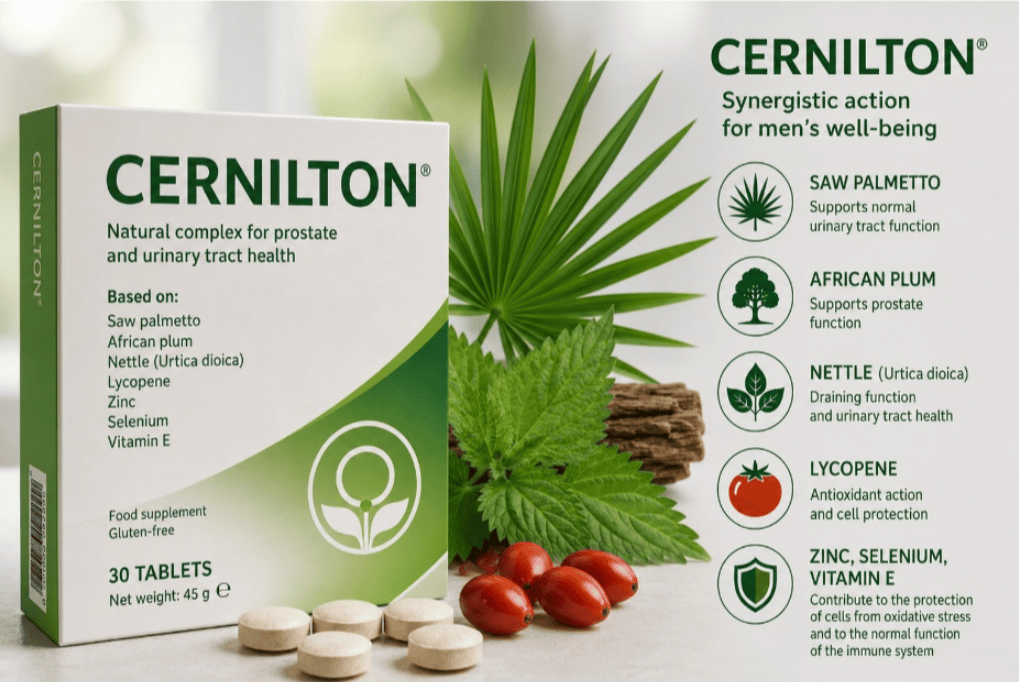
It is a pollen extract used for decades in Europe and Japan.
Numerous studies have highlighted that it can help in reducing perineal pain, improving urination, decreasing urinary frequency, and therefore improving the quality of life.
In my experience, I have found interesting benefits in patients with CPPS.
Serenoa repens (e.g., Permixon)

Serenoa repens is derived from the fruits of an American dwarf palm and is also known by the name saw palmetto. It is very well known for the treatment of benign prostatic hyperplasia but can also offer benefits in some patients with chronic prostatitis.
Possible mechanisms include both the reduction of prostatic edema and inflammation, resulting in improved urinary symptoms. In some individuals, it may negatively affect both erection and sexual desire.
Let’s keep in mind that in all histological examinations performed on tissue pieces resected with TURP in subjects with benign prostatic hyperplasia, foci of chronic prostatitis are always detected.
Turmeric and Curcumin (e.g., Curcumina Redox)

Curcumin is the main active ingredient in turmeric.
In recent years, it has become one of the most studied natural anti-inflammatories in the world.
It acts on numerous molecules involved in inflammation, such as TNF-alpha, NF-kB, COX-2, and proinflammatory interleukins.
Some studies suggest a possible role in reducing chronic prostate inflammation and persistent pelvic pain.
Pygeum africanum (e.g., Pygeum Africanum extracts)

Although I do not use it in my patients, it seems to possess anti-inflammatory, anti-edema, and antioxidant activity.
Many patients report improvements in urinary burning and irritative symptoms.
Boswellia serrata (e.g., Fito Boswellia supplement)

Boswellia contains boswellic acids with well-documented anti-inflammatory action and can therefore help reduce pelvic pain, decrease chronic inflammation, and improve perineal comfort.
For this reason, it is frequently included in supplements dedicated to chronic prostatitis.
Nettle (Urtica dioica) (e.g., Arkocapsules nettle)

Nettle is one of the most widely used plants in antiquity and in the European phytotherapeutic tradition.
Root extracts appear to possess immunomodulatory activity with an anti-inflammatory action and ultimately beneficial effects on urination.
Scientific evidence is less solid compared to quercetin and Cernilton, but it remains one of the most widely used substances.
So what is the most effective natural supplement for prostatitis?
There is no ideal supplement for everyone.
In general, the formulations that tend to offer the best results are those that combine Quercetin with Cernilton, Curcumin, Boswellia, and Serenoa repens.
Can herbs cure prostatitis?
No. This is probably the most important point to clarify.
Herbs can help control inflammation, pain, and urinary symptoms, improving quality of life.
However, they absolutely do not eliminate a documented bacterial prostatitis. When a bacterial infection is present, antibiotic therapy remains the fundamental treatment.
Why do many patients with prostatitis improve more with physiotherapy than with optimizers / supplements?
The answer is simple.
Today we know that about 90-95% of chronic prostatitis diagnoses actually belong to chronic pelvic pain syndrome (CPPS).
In many of these men, the main problem is not the prostate but hypertonia of the pelvic floor, with the appearance of myofascial trigger points and subsequent inflammation of the pudendal nerves.
In these cases, pelvic floor physiotherapy can be more effective than any supplement.
What do I recommend to my patients?
In my clinical practice, I consider phytotherapy a complementary tool.
In patients with non-bacterial chronic prostatitis and CPPS, I frequently use multimodal approaches that may include:
- pelvic floor physiotherapy
- stress management
- treatment of neuropathic pain
- lifestyle modifications
- selected phytotherapeutic supplementation
The goal is not to cure the prostate but to treat the mechanism generating the symptoms.
Conclusions
The best scientific evidence currently available indicates that Quercetin, Cernilton, Serenoa repens, Curcumin, Pygeum africanum, and Boswellia can only contribute to the improvement of the symptoms of chronic prostatitis and chronic pelvic pain syndrome, but not resolve it.
Let’s remember, however, that no herb represents a miracle cure.
The most effective strategy remains a correct diagnosis followed by a personalized treatment that integrates phytotherapy, physiotherapy, pain management, and lifestyle modifications.
Article reviewed by Prof. Federico Guercini, Specialist in Urology and Andrology.
FAQ – Frequently asked questions about effective herbs for prostatitis
What is the most effective herb for prostatitis?
Among the natural substances most studied in chronic prostatitis and chronic pelvic pain syndrome (CPPS), quercetin is probably the one supported by the most solid scientific evidence. Several studies have shown a significant reduction in pain and urinary symptoms.
Does Serenoa Repens cure prostatitis?
No. Serenoa repens does not cure prostatitis but can help reduce some urinary symptoms and prostate inflammation, especially when prostatitis is associated with benign prostatic hyperplasia.
Is turmeric good for the prostate?
Curcumin, the active ingredient in turmeric, possesses documented anti-inflammatory and antioxidant properties. Some studies suggest it may help reduce chronic prostate inflammation.
Can green tea help with prostatitis?
The catechins in green tea, particularly epigallocatechin gallate (EGCG), have antioxidant effects that could help limit the oxidative stress involved in chronic prostatitis.
Which natural supplements are most used for prostatitis?
The most used supplements generally contain:
- Quercetin
- Cernilton
- Serenoa repens
- Curcumin
- Boswellia serrata
- Pygeum africanum
Can herbs replace antibiotics?
No. In the presence of documented bacterial prostatitis, antibiotics represent the fundamental treatment. Herbs can optionally be used as complementary support.
Does quercetin lower PSA?
There is no scientific evidence demonstrating a significant and consistent reduction in PSA. However, it can help reduce prostate inflammation.
How long does it take to see the benefits of phytotherapy?
In most clinical studies, improvements appear after 4-12 weeks of continuous treatment.
What is the best natural remedy for chronic prostatitis?
There is no universal natural remedy. The best evidence relates to quercetin and Cernilton, especially in patients with chronic pelvic pain syndrome. Optimal results are achieved by integrating them into a multimodal approach.
Can stress reduce the effectiveness of natural treatments?
Yes. Numerous studies show that chronic stress, anxiety, and pelvic floor hypertonia can significantly worsen the symptoms of chronic prostatitis.
Do herbs work in CPPS?
They can contribute to symptom improvement but are generally more effective when included within a multimodal approach comprising pelvic floor physiotherapy, lifestyle modifications, and treatment of neuropathic pain.
Are there any contraindications to prostate supplements?
Yes. Even natural substances can interact with anticoagulant, antiplatelet, antihypertensive medications, and other therapies. It is always advisable to discuss it with your doctor or urologist.
Bibliography
- Shoskes DA, Zeitlin SI, Shahed A, Rajfer J. Quercetin in men with category III chronic prostatitis: a preliminary prospective, double-blind, placebo-controlled trial. Urology. 1999;54(6):960-963.
- Wagenlehner FME, Schneider H, Ludwig M, Schnitker J, Brähler E, Weidner W. A pollen extract (Cernilton) in patients with inflammatory chronic prostatitis/chronic pelvic pain syndrome. Eur Urol. 2009;56(3):544-551.
- Cai T, Verze P, Brugnolli A, et al. Adjuvant Serenoa repens improves symptoms and quality of life in chronic prostatitis/chronic pelvic pain syndrome. Urologia. 2013;80(3):180-186.
- Magri V, Wagenlehner FME, Perletti G. Antioxidant therapy in chronic prostatitis/chronic pelvic pain syndrome. Arch Ital Urol Androl. 2019;91(1):51-54.
- Rees J, Abrahams M, Doble A, Cooper A. Diagnosis and treatment of chronic bacterial prostatitis and chronic prostatitis/chronic pelvic pain syndrome. BJU Int. 2015;116(4):509-525.
- Pontari MA. Chronic prostatitis/chronic pelvic pain syndrome. Urol Clin North Am. 2008;35(1):81-89.
- Franco JVA, Turk T, Jung JH, et al. Non-pharmacological interventions for treating chronic prostatitis/chronic pelvic pain syndrome. Cochrane Database Syst Rev. 2018;5.
- Nickel JC, Shoskes D, Wagenlehner FME. Management of chronic prostatitis/chronic pelvic pain syndrome. Eur Urol Focus. 2017;3(2-3):124-131.
- Anderson RU, Wise D, Sawyer T, Chan CA. Integration of myofascial trigger point release and paradoxical relaxation training treatment of chronic pelvic pain. J Urol. 2005;174(1):155-160.
- Bonkat G, et al. EAU Guidelines on Urological Infections.
