


Discover how environmental factors, oxidative stress, obesity, smoking, sleep, and endocrine disruptors influence male fertility and spermatogenesis.
Key Points of the Article
- Male fertility depends not only on sperm count, but also on sperm quality, motility, and the health of the testicular environment.
- Environmental factors such as pollution, obesity, and oxidative stress negatively affect spermatogenesis and sperm quality.
- Endocrine disruptors and oxidative stress can damage sperm cells, impairing male fertility.
- Habits such as smoking, alcohol consumption, and a sedentary lifestyle increase the risk of infertility; improving these factors is essential.
- Maintaining a balance between general health, environmental exposure, and lifestyle is crucial for male reproductive function.
Male fertility does not depend solely on the number of spermatozoa present in semen. Today we know that sperm motility, sperm DNA integrity, mitochondrial function, chromatin organization, and the quality of the testicular microenvironment are also critical determinants of reproductive potential [1,4,8,9].
Recent evidence suggests that environmental factors and lifestyle habits may alter spermatogenesis through specific cellular mechanisms, particularly oxidative stress, inflammation, endocrine disruption, and epigenetic damage [1,2,3,5,7].
Contents
- What is spermatogenesis and why it matters for male fertility
- Oxidative stress and sperm damage: the key mechanism
- Air pollution and male fertility
- Endocrine disruptors: what they are and how they alter testicular function
- Obesity, metabolism, and sperm quality
- Smoking, alcohol, and habits that reduce male fertility
- Sleep, stress, and biological rhythms
- Sperm DNA and epigenetics: why they matter more today
- How to protect male fertility through lifestyle changes
- Conclusion
What is spermatogenesis and why it matters for male fertility
Spermatogenesis is the process by which the testes produce mature spermatozoa from germ cells. For this process to occur correctly, a precise balance is required between germ cells, Sertoli cells, Leydig cells, hormonal signals, and the local metabolic state [4,8,9].
When this balance is disrupted, it does not only reduce the quantity of sperm produced, but it can also impair their biological quality [4,8].
Recent research suggests that male fertility should be understood as the result of a complex cellular ecosystem. Mitochondrial function, sperm chromatin organization, and epigenetic mechanisms all contribute to the final fertilizing capacity [4,8,9].
Therefore, while semen analysis remains fundamental, it does not provide a complete assessment of male reproductive potential on its own [8,9].
Oxidative stress and sperm damage: the key mechanism
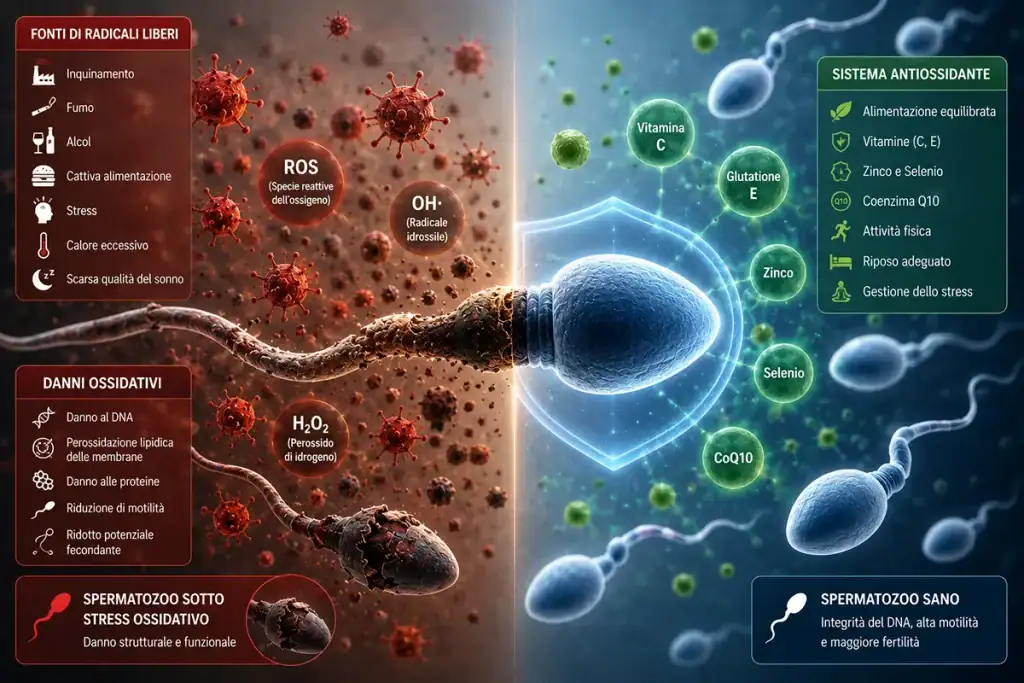
Among the mechanisms linking environment, metabolism, and male infertility, oxidative stress is currently considered one of the most significant [2,5,6,7].
It occurs when the antioxidant capacity of the seminal and testicular system is insufficient to protect the sperm produced from oxidative damage [5,6].
Under these conditions, spermatozoa become particularly vulnerable because their membranes are rich in easily oxidizable lipids, and they have limited repair capacities [5,7].
Consequences can include reduced motility, damage to sperm membranes, mitochondrial alterations, and sperm DNA fragmentation [5,6,7]. This explains why very diverse factors—such as smoking, obesity, pollution, toxic exposure, and poor lifestyle habits—converge to cause this common final damage [1,2,5,7].
Air pollution and male fertility

Air pollution is one of the most studied environmental factors in the field of male fertility today [2].
Recent reviews indicate that chronic exposure to fine particulate matter and other pollutants may be associated with a decline in sperm quality, primarily through increased oxidative stress and systemic inflammation [2,10].
This finding is significant because it suggests that the environment is not a simple background, but an active component of biological risk. In men living in highly exposed urban areas, or those who already present other predisposing factors such as overweight, smoking, or a sedentary lifestyle, pollution can contribute additively to reproductive damage [1,2].
Endocrine disruptors: what they are and how they alter testicular function
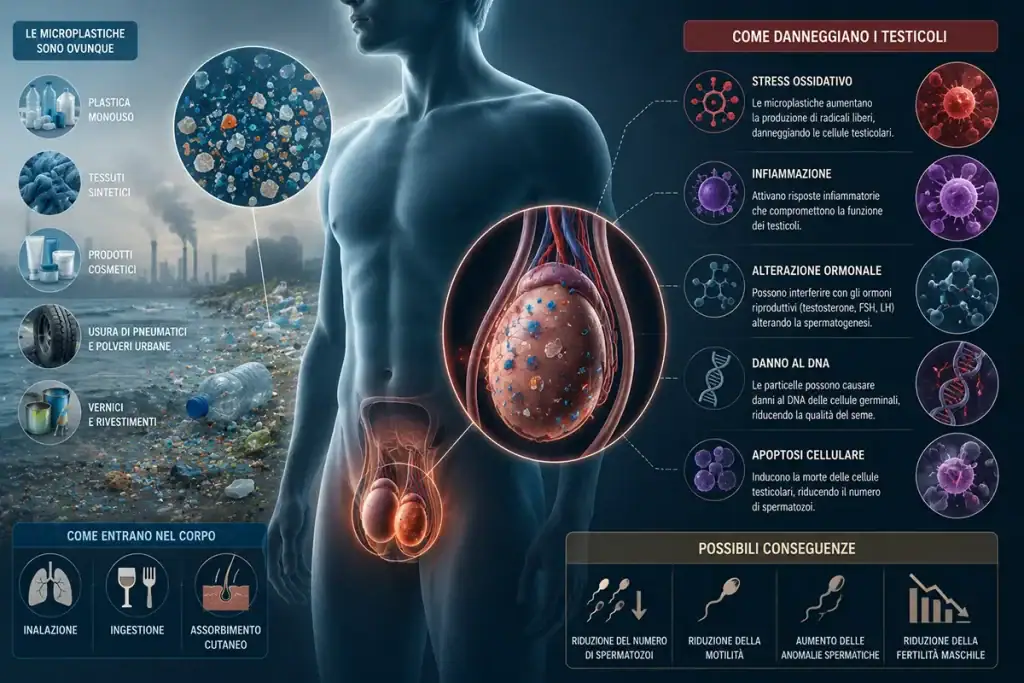
Among the most discussed environmental factors are endocrine disruptors, which are chemical substances, either natural or synthetic, capable of altering the normal functioning of the hormonal system.
These substances include bisphenols, phthalates, pesticides, PFAS, and other emerging contaminants [3,10,12]. They can interfere with normal hormonal signaling, alter steroidogenesis, promote oxidative stress, and modify the epigenetic status of germ cells [3,9].
The problem does not only concern the final spermatozoon. Studies suggest that endocrine disruptors can also affect the testicular microenvironment, influencing Sertoli and Leydig cells, and thereby destabilizing the entire spermatogenetic process [3,9].
Recent data on the presence of microplastics in the human testis have further intensified attention regarding the role of emerging environmental contaminants [10,12].
Obesity, metabolism, and sperm quality
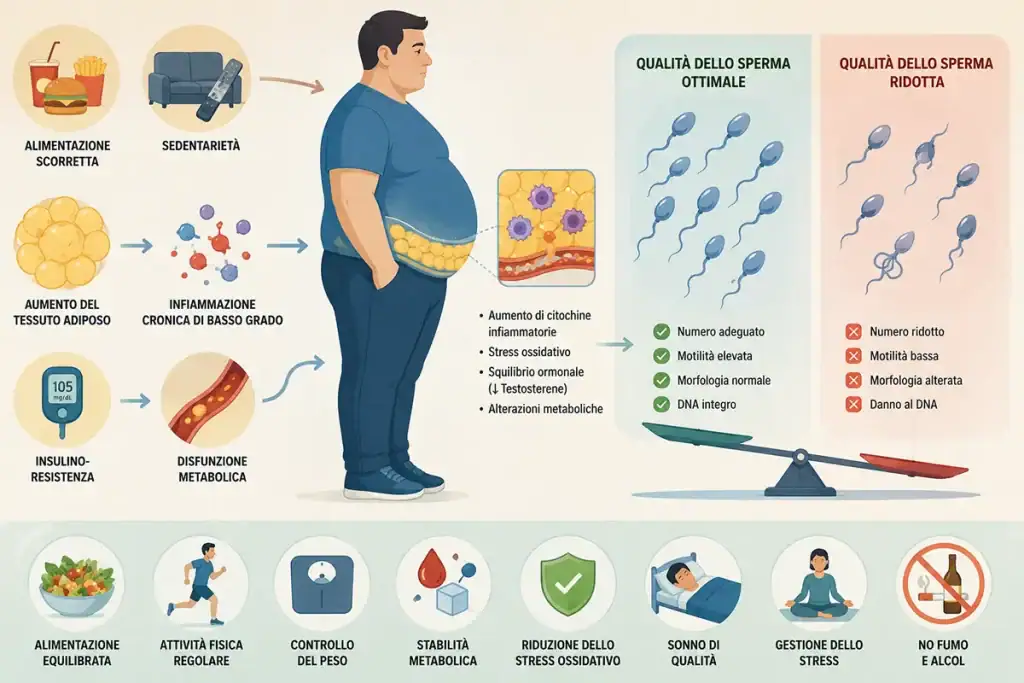
Obesity is one of the most significant modifiable factors affecting male fertility [1,11].
Excess adipose tissue promotes low-grade chronic inflammation, insulin resistance, hormonal alterations, and increased oxidative stress, all of which can compromise spermatogenesis [7,11].
From a biological standpoint, the damage can involve both testosterone production and the metabolic and structural support provided to germ cells [11]. Furthermore, overweight and a sedentary lifestyle can be associated with an overall worsening of the metabolic environment, leading to unfavorable effects on semen quality [1,11].
For this reason, male reproductive health is increasingly viewed as closely linked to general cardio-metabolic health [11].
Smoking, alcohol, and habits that reduce male fertility
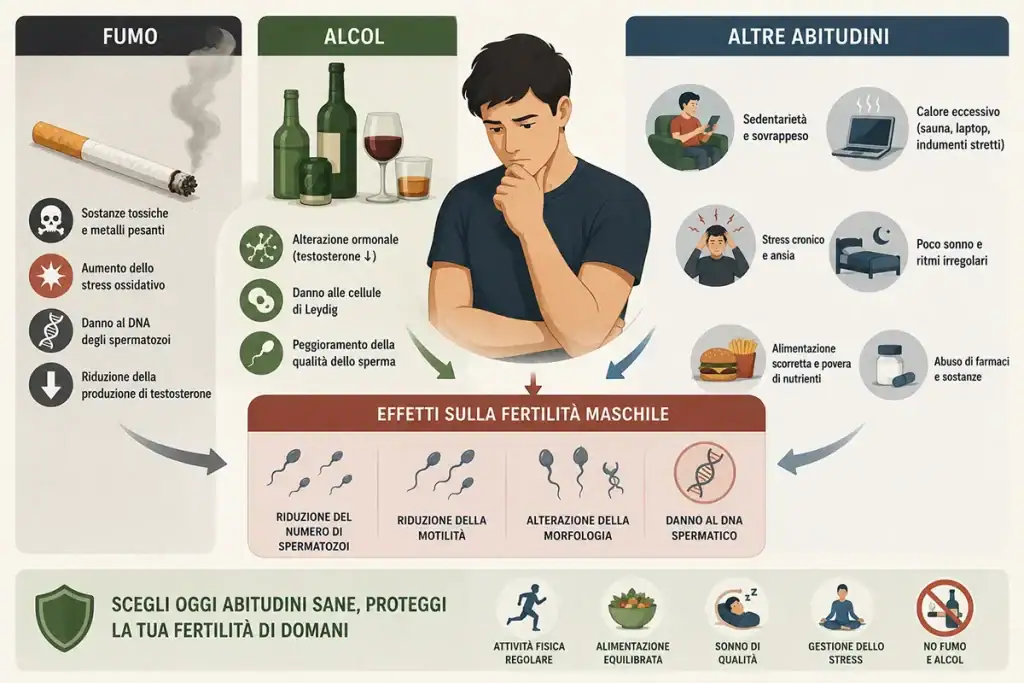
Cigarette smoking has long been associated with a decline in sperm quality, mainly due to its effect on oxidative damage and sperm DNA integrity [1,5,7]. Excessive alcohol consumption can also contribute to an unfavorable endocrine and metabolic imbalance [1].
The most important aspect, however, is the cumulative effect. In clinical practice, there is rarely a single dominant factor: smoking, poor sleep quality, stress, inadequate diet, excess weight, and physical inactivity tend to combine along the same biological pathways, namely inflammation, oxidative stress, and endocrine dysfunction [1,5,7].
It is precisely this convergence that makes a comprehensive approach to lifestyle useful.
Sleep, stress, and biological rhythms
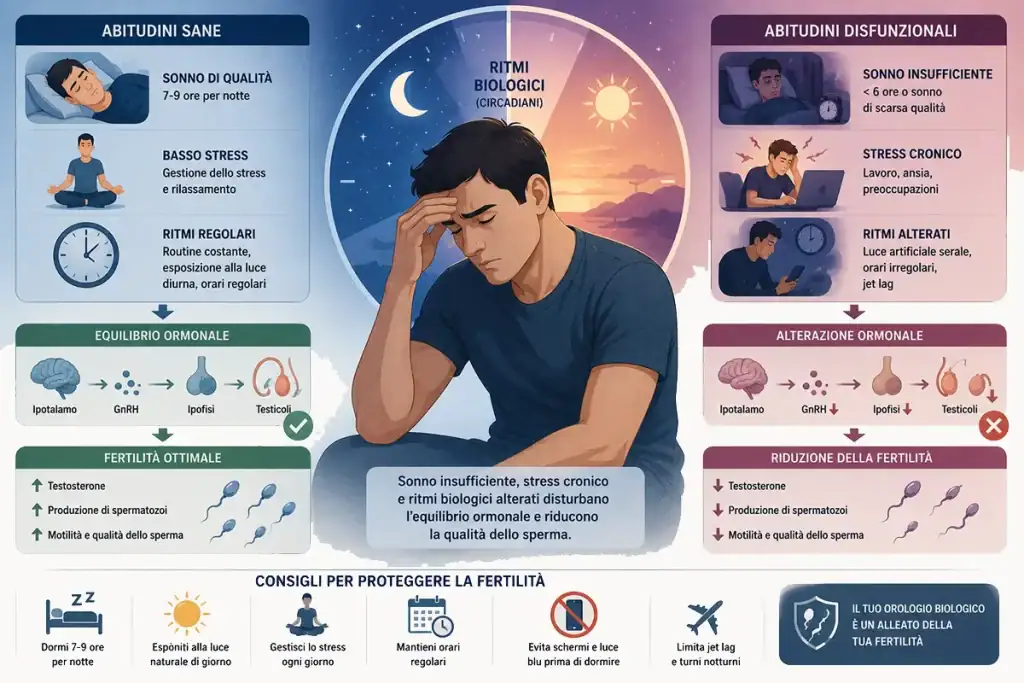
Sleep and the overall regulation of lifestyle also deserve attention.
The most up-to-date summaries of male risk factors include the role of daily habits and chronic stress loads among elements capable of influencing sperm quality and oxidative status [1,7].
In this context, insufficient sleep and prolonged stress can act as amplifiers of inflammation, metabolic dysfunction, and unfavorable habits [1,7].
Sperm DNA and epigenetics: why they matter more today
One of the most important developments in recent research is the growing attention paid to the molecular quality of the spermatozoon [3,8,9].
An increasing number of studies emphasize the importance of sperm chromatin, DNA fragmentation, and modifications in gene expression regulation as elements capable of influencing fertility, embryo development, and reproductive outcomes [8,9].
This means that a sperm cell may appear quantitatively adequate but present molecular alterations that reduce its biological quality [8].
Endocrine disruptors and other environmental factors can act precisely at this level, modifying the genetic asset of germ cells [3,9].
Consequently, male fertility is currently interpreted less as a simple sperm count and more as an expression of overall cellular health [4,8,9].
How to protect male fertility through lifestyle changes
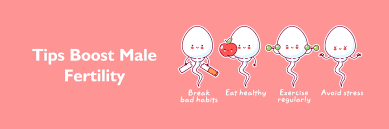
Available evidence does not only serve to describe damage, but also to define realistic preventive measures.
The most rational strategies today include weight control, smoking reduction, alcohol moderation, overall lifestyle improvement, and, when possible, attention to environmental and occupational exposure [1,2,7,11].
This approach has a strong biological rationale. Intervening in body weight, toxic habits, and oxidative load means acting directly on the mechanisms that recent literature identifies as most relevant to male fertility [2,5,7,11].
From this perspective, preconception prevention in men should be considered an integral part of reproductive medicine.
Conclusion
New evidence shows that male fertility is the result of a delicate balance between spermatogenesis, metabolism, environment, and lifestyle [1,4,11].
Pollution, endocrine disruptors, microplastics, obesity, smoking, and oxidative damage can compromise sperm quality through convergent biological pathways [2,3,5,10,12].
Therefore, male fertility should increasingly be considered an indicator of a man’s general health and his relationship with the environment [1,11].
From a clinical and preconception standpoint, intervening in lifestyle habits and limiting harmful exposures is not generic advice, but a strategy with a concrete biological basis [1,2,7,11].
References
[1] Sciorio R, Tramontano L, Adel M, Fleming S. Decrease in Sperm Parameters in the 21st Century: Obesity, Lifestyle, or Environmental Factors? An Updated Narrative Review. J Pers Med. 2024;14(2):198.[2] Omolaoye TS, Skosana BT, Ferguson LM, Ramsunder Y, Ayad BM, Du Plessis SS. Implications of Exposure to Air Pollution on Male Reproduction: The Role of Oxidative Stress. Antioxidants (Basel). 2024;13(1):64.[3] Deng X, Liang S, Tang Y, Li Y, Xu R, Luo L, et al. Adverse effects of bisphenol A and its analogues on male fertility: An epigenetic perspective. Environ Pollut. 2024;345:123393.[4] Mai Z, Yang D, Wang D, Zhang J, Zhou Q, Han B, et al. A narrative review of mitochondrial dysfunction and male infertility. Transl Androl Urol. 2024;13(9):2134-2145.[5] Pavuluri H, Bakhtiary Z, Panner Selvam MK, Hellstrom WJG. Oxidative Stress-Associated Male Infertility: Current Diagnostic and Therapeutic Approaches. Medicina (Kaunas). 2024;60(6):1008.[6] Mottola F, Palmieri I, Carannante M, Rocco L. Oxidative Stress Biomarkers in Male Infertility: Established Methodologies and Future Perspectives. Genes (Basel). 2024;15(5):539.[7] Sengupta P, Pinggera GM, Calogero AE, Agarwal A. Oxidative stress affects sperm health and fertility—Time to apply facts learned at the bench to help the patient: Lessons for busy clinicians. Reprod Med Biol. 2024;23(1).[8] Balder P, Jones C, Coward K, Yeste M. Sperm chromatin: Evaluation, epigenetic signatures and relevance for embryo development and assisted reproductive technology outcomes. Eur J Cell Biol. 2024;103(3):151429.[9] Hosseini M, Khalafiyan A, Zare M, Karimzadeh H, Bahrami B, Hammami B, et al. Sperm epigenetics and male infertility: unraveling the molecular puzzle. Hum Genomics. 2024;18(1):57.[10] Daniels D, Berger Eberhardt A. Climate change, microplastics, and male infertility. Curr Opin Urol. 2024;34(5):366-370.[11] Cannarella R, Crafa A, Curto R, Condorelli RA, La Vignera S, Calogero AE. Obesity and male fertility disorders. Mol Aspects Med. 2024;97:101273.[12] Hu CJ, Garcia MA, Nihart A, Liu R, Yin L, Adolphi N, et al. Microplastic presence in dog and human testis and its potential association with sperm count and weights of testis and epididymis. Toxicol Sci. 2024;200(2):235-240.You might also be interested in this article
