


In Summary
- HPV is extremely common and often silent: The immune system usually clears it, but the virus can cause genital warts or contribute to cancers of the penis, anus, and oropharynx.
- Transmission occurs through direct skin-to-skin contact: Vaginal, anal, and oral sex transmit the virus even without penetration, ejaculation, or visible symptoms in the partner.
- Genital warts are the most frequent manifestation: They appear as benign but contagious and recurrent growths that require a clinical diagnosis through a urological or dermatological examination.
- There is no universal screening or definitive cure for the virus: Pharmacological or surgical treatments eliminate visible lesions, but the eradication of the pathogen depends solely on the immune system.
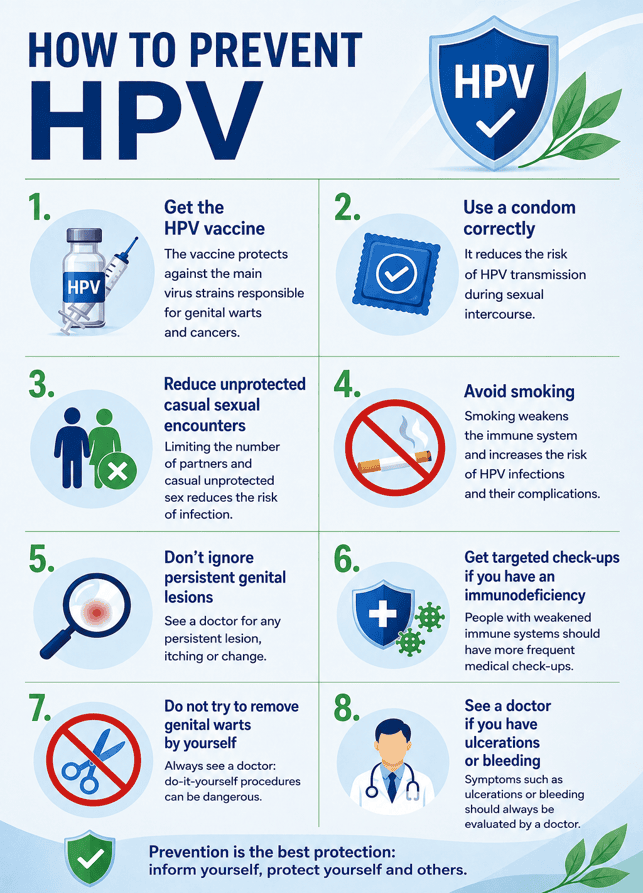
- Vaccination is the primary prevention tool: It protects against the most dangerous genotypes, is most effective before the onset of sexual activity, but remains useful in adulthood or even with a history of genital warts.
- Condoms are not enough: They significantly reduce the chances of transmission but do not offer total protection, as the virus can reside on uncovered genital skin areas.
- Early diagnosis is essential: Any persistent, ulcerated, or bleeding genital lesion requires immediate urological evaluation and should never be treated with DIY remedies.
Table of Contents
- HPV in Men: Why It Is Important to Know About It
- What Is HPV?
- How Is HPV Transmitted in Men?
- How Long Does HPV Infection Last in Men?
- What Are the Symptoms of HPV in Men?
- What Do Genital Warts Look Like?
- HPV and Cancer in Men
- How Is HPV Diagnosed in Men?
- Is There a Definitive Cure for HPV in Men?
- How Are Male Genital Warts Treated?
- Is the HPV Vaccine Useful for Men?
- Can You Get the HPV Vaccine After Having Genital Warts?
- Does a Condom Protect Against HPV?
- What Should the Female Partner of a Man With HPV Do?
- HPV in Men and Fertility
- When Should You See a Urologist?
- Frequently Asked Questions About HPV in Men
- Conclusions
- Bibliography
HPV in Men: Why It Is Important to Know About It
HPV in men is far more common than many people realize. Human papillomavirus, commonly known as HPV, comprises more than 200 different viral types, some of which are transmitted primarily through sexual contact.
In most men, the infection causes no symptoms and is spontaneously controlled by the immune system. In other cases, it can cause genital warts or, more rarely, contribute to the development of precancerous lesions and cancers of the penis, anus and oropharynx.
Men, therefore, are not simply potential carriers of the virus: they can develop HPV-related diseases themselves. Vaccination, protection during sexual activity and medical assessment of suspicious lesions are the main strategies for prevention.
What Is HPV?
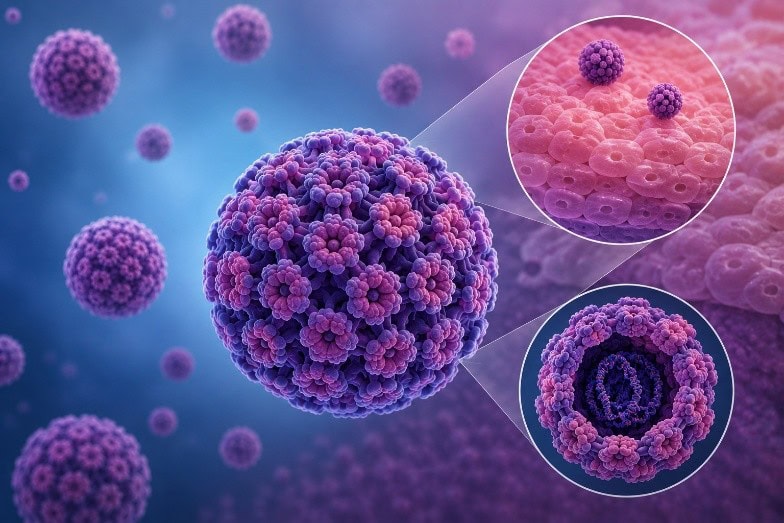
Human papillomavirus is a virus capable of infecting the skin and mucous membranes. HPV types affecting the genital area are generally divided into two main groups.
Low-Risk HPV Types
HPV types 6 and 11 are responsible for most genital warts. These lesions are benign and do not normally develop into cancer, but they can be contagious, recurrent and psychologically distressing.
High-Risk HPV Types
Oncogenic HPV types include primarily HPV 16 and 18, together with other genotypes such as 31, 33, 45, 52 and 58.
Persistent infection with these viruses can, over the years, contribute to the development of precancerous cellular changes.
Having a high-risk HPV infection does not mean that a person has cancer. Cancer progression occurs only in a minority of persistent infections and generally takes many years.
According to the World Health Organization, the immune system spontaneously controls the infection in approximately 90% of people. Persistence of oncogenic HPV genotypes is the main risk factor for HPV-related cancer.
HPV can be associated with cancers of the penis, anus, mouth and throat, as well as cancers of the female genital tract.
How Is HPV Transmitted in Men?
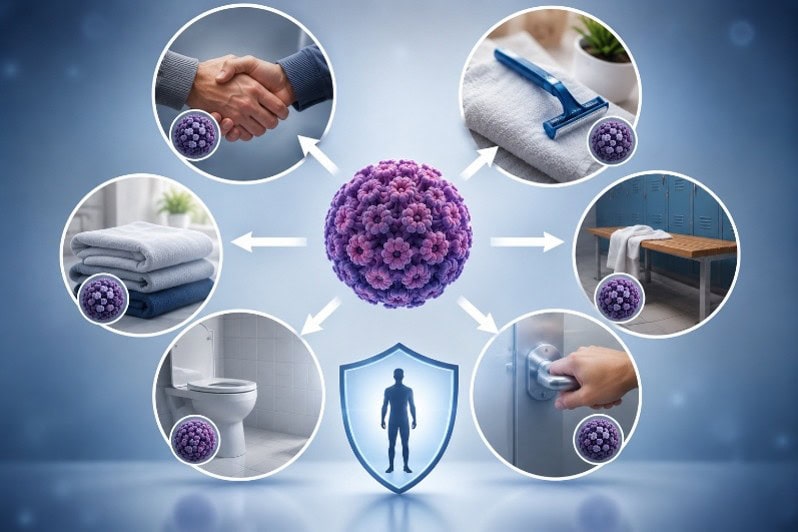
HPV is transmitted primarily through direct skin-to-skin or skin-to-mucosa contact during:
- vaginal intercourse;
- anal intercourse;
- oral sex;
- genital contact without penetration;
- sharing sex toys that have not been adequately protected or cleaned.
Ejaculation is not necessary for HPV transmission. The virus may also be present on genital skin that is not covered by a condom.
Transmission can occur from completely asymptomatic individuals.
Furthermore, HPV infection may remain silent for months or even years. Therefore, an HPV diagnosis within a stable relationship does not establish when transmission occurred and should not be considered evidence of recent infidelity.
Transmission through towels, toilet seats, swimming pools or commonly used objects is considered far less likely than transmission through direct intimate contact.
How Long Does HPV Infection Last in Men?
Most HPV infections resolve spontaneously within one or two years. However, there is no identical clearance time for everyone.
Persistence may be favored by:
- cigarette smoking;
- immunosuppression;
- HIV infection;
- immunosuppressive therapies;
- a high number of sexual partners;
- infection with multiple HPV genotypes;
- chronic local inflammation;
- poor genital hygiene;
- lack of circumcision when associated with other predisposing factors.
The term “clearance” should be used cautiously. A previously positive HPV test becoming negative may indicate that the viral load has fallen below detectable levels, but it does not necessarily prove the complete disappearance of every viral particle from the tissues.
What Are the Symptoms of HPV in Men?
In most cases, HPV in men causes no symptoms. A man may therefore transmit the virus without knowing that he has acquired the infection.
When clinical manifestations occur, genital warts are among the most common.
What Do Genital Warts Look Like?
Genital warts may appear as:
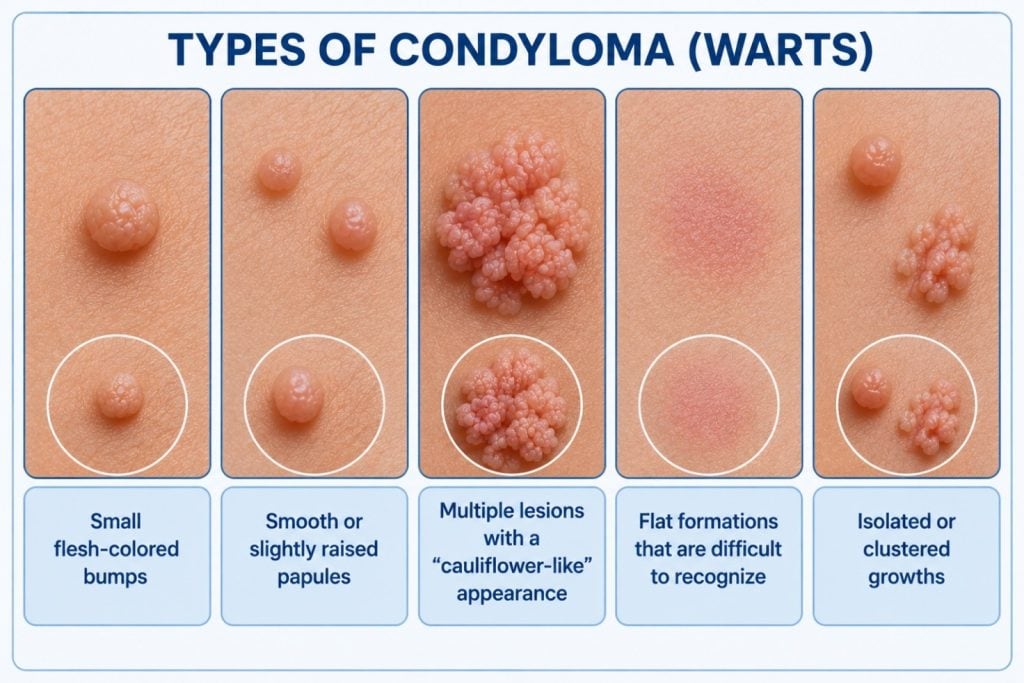
In men, genital warts may occur on the glans, foreskin, coronal sulcus, penile shaft, scrotum, pubic area, perineum and perianal region.
More rarely, they may involve the urethral opening or anal canal.
They are generally painless but may occasionally cause itching, burning, irritation, minor bleeding or discomfort during sexual intercourse.
HPV and Cancer in Men
Although relatively uncommon, persistent infection with high-risk HPV types can contribute to the development of several cancers in men.
Penile Cancer
A significant proportion of penile carcinomas are associated with HPV, particularly HPV type 16.
The absolute risk remains low. Nevertheless, a persistent penile lesion that becomes ulcerated, bleeds or feels indurated should be promptly evaluated by a urologist.
Anal Cancer
HPV is one of the main causes of anal cancer.
The risk is higher among men who have sex with men, people living with HIV, immunocompromised individuals and patients with a history of HPV-related anal lesions.
Oropharyngeal Cancer
HPV can contribute to certain cancers affecting the tonsils and base of the tongue. HPV 16 is the genotype most frequently involved.
These cancers do not occur exclusively in smokers and may also develop in individuals without traditional risk factors for head and neck cancer.
There is currently no approved oral HPV test for routine screening of asymptomatic men in the general population.
How Is HPV Diagnosed in Men?
Unlike cervical cancer screening in women, there is no validated routine HPV screening program for all men.
The so-called male HPV test, performed by collecting samples from the penis, glans or urethra, may be available in some laboratories, but it has important limitations:
- sampling procedures are not standardized;
- a negative result does not completely exclude HPV infection;
- results may change over time;
- a positive result cannot reliably predict clinical progression;
- the result often does not alter the management of an asymptomatic patient.
The CDC does not recommend HPV testing as routine screening for men.
Urological or Dermatological Examination
Diagnosis of genital warts is primarily clinical and is usually made by direct examination of the lesions.
During the examination, the physician may inspect the penis, glans, foreskin, scrotum, pubic area, perineum and perianal region.
In selected suspicious cases, magnified examination of the penis may be useful, sometimes in association with acetic acid application.
When Is a Biopsy Necessary?
A biopsy may be indicated when a lesion:
- has an atypical appearance;
- is pigmented, ulcerated or indurated;
- bleeds easily;
- appears fixed to deeper tissues;
- grows rapidly;
- does not respond to treatment;
- occurs in an immunocompromised patient;
- raises diagnostic uncertainty.
The primary purpose of biopsy is to rule out precancerous lesions or penile cancer.
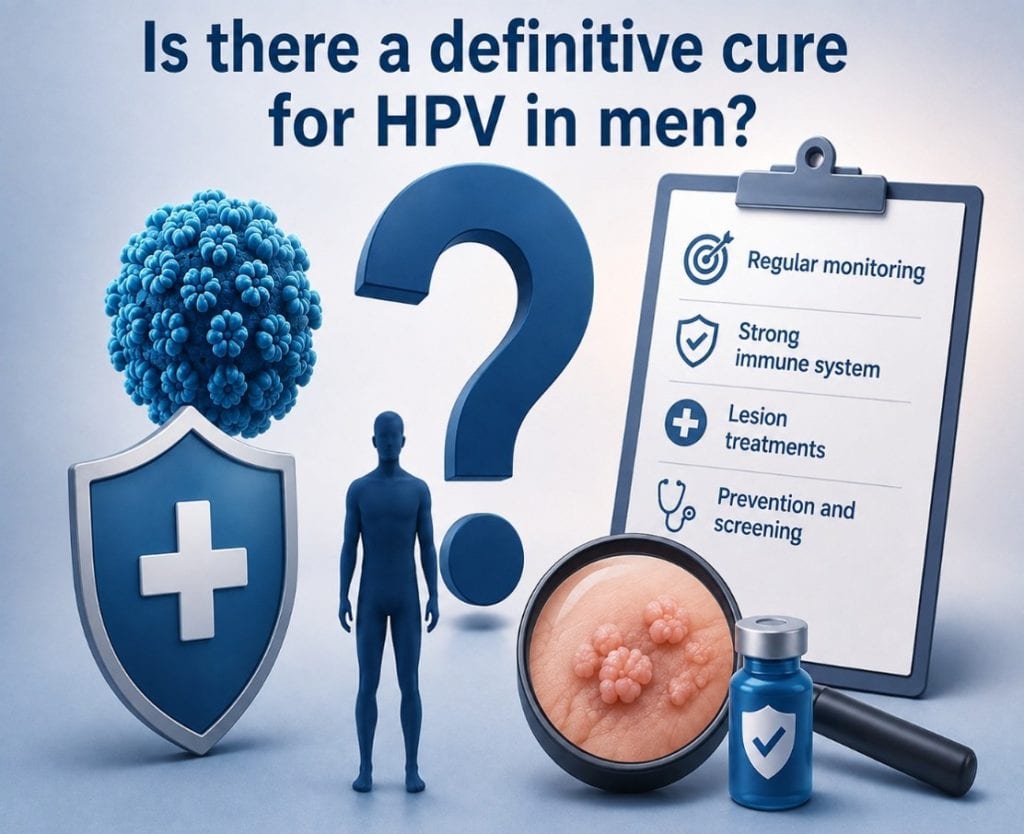
Is There a Definitive Cure for HPV in Men?
There is currently no medication capable of directly eradicating HPV from the body.
Available treatments remove visible lesions, while control of the underlying infection depends mainly on the patient’s immune response.
How Are Male Genital Warts Treated?
Treatment depends on the number, size, location and extent of the lesions, as well as the patient’s overall clinical condition.
1. Patient-Applied Treatments
The main options include imiquimod, podophyllotoxin (podofilox) and sinecatechins.
These treatments target the clinical manifestations of HPV infection—namely genital warts—but they do not directly eradicate HPV from the body.
Imiquimod
Imiquimod is a topical immunomodulatory medication. Stimulates the local immune response of the skin and is primarily used to treat external anogenital warts.
Is not a direct antiviral drug. It activates immune receptors, particularly TLR7, promoting the production of interferon-alpha and other cytokines that help the immune system respond to HPV-infected cells.
The most common adverse effects are local and include redness, burning, erosion, itching, swelling and irritation.
A moderate local inflammatory reaction is relatively common during treatment.
Podophyllotoxin
Podophyllotoxin, also known as podofilox, is a topical cytotoxic medication used primarily to treat external anogenital warts caused by HPV.
Unlike imiquimod, it does not primarily stimulate the immune system. Instead, it acts directly on the cells of the lesion by disrupting microtubule formation and cell division.
The most common adverse effects are local and include burning, pain, redness, erosion and ulceration.
The medication should be applied specifically to the wart while avoiding surrounding healthy skin.
Sinecatechins
Sinecatechins are a plant-derived topical treatment used for external anogenital warts.
The active substance consists of a purified extract of green tea leaves (Camellia sinensis) rich in catechins.
Catechins have antioxidant properties and appear to exert immunomodulatory and antiproliferative effects on affected cells.
Common adverse effects include redness, itching, burning, pain, swelling and local erosions.
2. Treatments Performed by a Physician or Urologist
The main options include:
- cryotherapy with liquid nitrogen;
- electrosurgery/electrocautery;
- laser treatment;
- surgical excision;
- application of trichloroacetic acid.
There is no single treatment that is best for every patient.
Treatment should be individualized according to the number, size and location of the lesions, cosmetic considerations, physician experience and the risk of local adverse effects.
Genital warts may recur even after complete removal, particularly during the first few months following treatment.
Furthermore, removing visible lesions does not necessarily mean that HPV transmission can no longer occur immediately afterward.
Is the HPV Vaccine Useful for Men?

Yes. HPV vaccination protects men against HPV genotypes responsible for most genital warts and many HPV-related precancerous and cancerous lesions.
The 9-valent HPV vaccine protects against nine HPV types, including oncogenic genotypes and the types responsible for the majority of genital warts.
Vaccination provides the greatest protection when administered before the onset of sexual activity, but it may also provide benefits later in life.
Previous infection with one HPV type does not necessarily mean that the person has already been exposed to all the other genotypes included in the vaccine.
The HPV vaccine is preventive: it does not eliminate an existing HPV infection and does not treat existing genital warts.
Vaccination programs and recommendations differ between countries. The number of doses depends primarily on the age at which vaccination begins and the individual’s immune status.
Can You Get the HPV Vaccine After Having Genital Warts?
Yes.
A history of genital warts or previous HPV positivity is not, in itself, generally a contraindication to HPV vaccination.
The vaccine will not cure an existing wart or eradicate an infection that has already been acquired, but it may provide protection against vaccine-covered HPV types that the person has not previously encountered.
The decision should take into account age, previous vaccination status, individual risk factors and national vaccination recommendations.
Routine HPV testing before vaccination is not necessary.
Does a Condom Protect Against HPV?
Condoms reduce the risk of HPV transmission but do not provide complete protection.
HPV can be present on genital areas that are not covered by a condom, including the pubic area, scrotum, base of the penis and perianal skin.
Nevertheless, condom use remains recommended because it:
- reduces the likelihood of HPV transmission;
- limits repeated exposure;
- protects against many other sexually transmitted infections;
- may help reduce ongoing viral exposure between partners.
What Should the Female Partner of a Man With HPV Do?
The female partner does not necessarily require more frequent cervical screening solely because her male partner has genital warts.
However, it is essential that she regularly participates in recommended cervical cancer screening programs using HPV testing and/or Pap testing according to her age and national guidelines.
If she has not been vaccinated, she can discuss HPV vaccination with her gynecologist or vaccination provider.
In stable couples, it is common for both partners to have already been exposed to HPV.
It is generally impossible to determine which partner transmitted the infection or exactly when transmission occurred.
HPV in Men and Fertility

Some studies have detected HPV in semen and have suggested a possible association between HPV infection and reduced sperm motility or alterations in certain semen parameters.
However, the available evidence does not demonstrate that HPV infection invariably causes male infertility.
Men experiencing fertility problems, persistent HPV infection or abnormal semen analysis results may benefit from an individualized andrological evaluation.
When Should You See a Urologist?
A urological examination is advisable in the presence of:
- growths on the penis or scrotum;
- perianal lesions;
- persistent ulcerations;
- unexplained genital bleeding;
- persistent changes in the color or thickness of penile skin;
- discharge or lesions near the urethral opening;
- genital warts that recur after treatment;
- HPV positivity associated with visible clinical lesions;
- questions regarding HPV vaccination in adulthood.
Prompt assessment helps distinguish genital warts from other conditions such as molluscum contagiosum, pearly penile papules, fibromas, dermatitis, syphilis and precancerous lesions.
Frequently Asked Questions About HPV in Men
Can a Man Have HPV Without Genital Warts?
Yes. Most HPV infections in men are asymptomatic. The absence of genital warts does not exclude either HPV infection or the possibility of transmission.
Can Genital Warts Turn Into Cancer?
Common genital warts are predominantly caused by HPV types 6 and 11, which are classified as low-risk types.
They do not normally progress to cancer. However, an atypical or persistent lesion should be medically evaluated and biopsied when clinically indicated.
Does a Negative HPV Test in a Man Rule Out Infection?
No.
The result depends on the anatomical site sampled and the amount of detectable virus present at that particular time.
This is one reason HPV testing is not recommended as universal screening for men.
Can HPV Cause Prostatitis?
There is currently insufficient clinical evidence to consider HPV a common cause of chronic prostatitis.
Detection of HPV does not automatically demonstrate that urinary or pelvic symptoms are caused by the virus.
How Long After HPV Exposure Do Genital Warts Appear?
Genital warts may appear weeks or months after exposure and, in some cases, considerably later.
It is therefore generally impossible to determine precisely when HPV transmission occurred.
Should Sexual Intercourse Be Avoided?
The risk of transmission is higher when visible genital warts are present.
Direct contact with the lesions should be avoided, and patients should follow their physician’s advice during treatment.
Condoms reduce but do not completely eliminate the risk of transmission.
Does Circumcision Protect Against HPV?
Circumcision may reduce the risk of acquiring and maintaining genital HPV infection, but it does not provide complete protection and does not replace vaccination or condom use.
Conclusions
HPV in men is extremely common and frequently causes no symptoms. In most cases, the immune system controls the infection spontaneously, while some infections cause genital warts or, more rarely, precancerous lesions and HPV-related cancers.
Because there is currently no standardized HPV screening program for the entire male population, prevention plays a particularly important role.
HPV vaccination, safer sexual practices and specialist evaluation of suspicious lesions can substantially reduce the consequences of HPV infection.
A urological examination is particularly recommended when genital warts, persistent ulcerations, unexplained bleeding or persistent changes in the skin of the penis are present
Bibliography
- Beltrame A, Dube Mandishora RS, Wang WV, et al. Impact of Male Human Papillomavirus (HPV) Vaccination on HPV Infection and HPV-Related Diseases: A Systematic Review. Rev Med Virol. 2026;36(4):e70171. doi:10.1002/rmv.70171.
- Hsu CH, Chen CF, Chu KA, Lin MH, Chang R. HPV vaccination and the risk of cancer in males. Vaccine. 2026;88:128923. doi:10.1016/j.vaccine.2026.128923.
- The Natural History of Human Papillomavirus (HPV) Infection in Males: Global Evidence From a Systematic Review and Meta-Analysis. 2026.
- Garolla A, Mereu S, Pizzol D, Yon DK, Rahmati M, Soysal P, et al. Papillomavirus infection and male infertility: a systematic review and meta-analysis. Health Sci Rep. 2024;7(9):e70048. doi:10.1002/hsr2.70048.
- Dube Mandishora RS, Dickey BL, Fan W, et al. Multinational epidemiological analysis of oral human papillomavirus incidence in 3,137 men. Nat Microbiol. 2024;9(11):2836-2846. doi:10.1038/s41564-024-01824-5.
- Rossotti R, Nava A, Baiguera C, et al. Oral HPV infection clearance and acquisition after nonavalent vaccination in men who have sex with men and transgender women: a prospective analysis. Eur J Clin Microbiol Infect Dis. 2024;43(9):1847-1854. doi:10.1007/s10096-024-04887-8.
- Bruni L, Albero G, Rowley J, et al. Global and regional estimates of genital human papillomavirus prevalence among men: a systematic review and meta-analysis. Lancet Glob Health. 2023. PMID: 37591583. Importante studio globale: prevalenza stimata di qualsiasi HPV genitale 31% e di HPV ad alto rischio 21% negli uomini.
- Pow J, Clarke L, McHale S, Gray-Brunton C. A systematic review and thematic synthesis exploring how gay, bisexual and other men who have sex with men (GBMSM) experience HPV and HPV vaccination. Hum Vaccin Immunother. 2025;21(1):2490440. doi:10.1080/21645515.2025.2490440.
- Han J, Zhang L, Chen Y, et al. Global HPV vaccination programs and coverage rates: a systematic review. EClinicalMedicine. 2025;84:103290. doi:10.1016/j.eclinm.2025.103290.
- Cao Q, Hou Y, Wang C, Yin J. Effect of human papillomavirus (HPV) vaccination on HPV infection and recurrence of HPV related disease after local surgical treatment: a systematic review and meta-analysis. PLoS One. 2024;19(12):e0312128. doi:10.1371/journal.pone.0312128.
